
Polarimetry analysis in industry, research and development

Analysis of optically active substances by determining the angle of rotation

A polarimeter is a device used to determine the direction of polarization of light and the rotation of optically active substances. These substances include sugars, amino acids and other chiral molecules. This is why polarimetry is an important analytical method in chemistry, pharmacy, food analysis and biochemistry. The measurement distinguishes between two variables.

  • Optical angle of rotation – It is the measured value that indicates the rotation of the polarization plane.

  • Specific angle of rotation – This is the value that takes into account the concentration of the sample as well as the path length of the measurement tube.

In order to reliably determine these measurement variables, the polarimeter must precisely record the path of the polarized light and the resulting rotation. This raises the question of how a polarimeter is technically constructed and how the measurement process works.

Contents

How does a polarimeter work?

The analytical instruments measure the change in the plane of polarization of linearly polarized light after it has interacted with an optically active (chiral) substance (e.g. sugar). In this interaction, the polarization direction of the light wave is rotated by a certain angle – the angle of rotation.

Example: Sucrose (bottom) rotates the polarization plane clockwise, while fructose (top) rotates it counterclockwise. This allows the two substances to be clearly distinguished from each other.

The angle of rotation provides valuable information about the molecular structure, purity and concentration of the substance under investigation.

The functionality of this analytical method can only be fully understood if certain properties of the analyzed samples are known. This is because not every substance affects polarized light – this ability is linked to certain features and influences.

Sample properties and Influences on the measurement

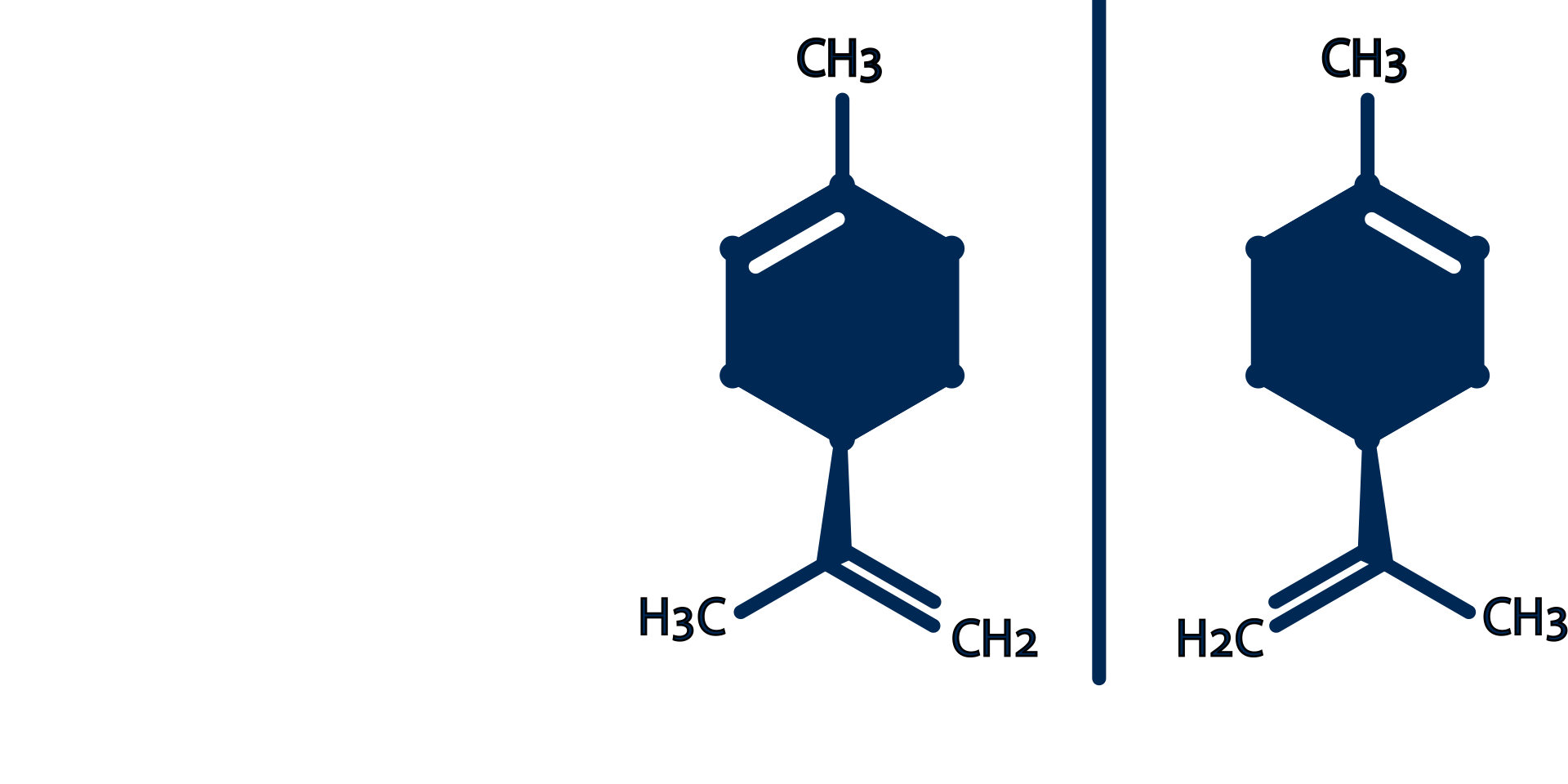
Limonene chirality Technical information

Chirality

Chirality describes the basic property of a molecule not to be congruent with its mirror image. The optical activity utilized in polarimetry only occurs with chiral molecules. Their spatial structure corresponds to a mirror image that cannot be aligned by rotation. One example is our own hands: the left hand corresponds to the molecule, the right to its mirror image - despite rotation, they never fit exactly on top of each other. Many chemical compounds show exactly this behavior. Due to their lack of symmetry, they can rotate the plane of polarization of light. This optical activity is measured and provides information on structure, purity and composition.
Information on the optical rotation value and optical activity

Influences on the measurement

The optical activity - and thus the measured value - is influenced by the temperature, the wavelength of the light and the length of the optical path. The length of the optical length is determined by the length of the measurement tube or cuvette used. A longer optical length results in a larger angle of rotation. The angle of rotation also increases with rising concentration. With temperature and wavelength, it depends on the substance under investigation whether a larger or smaller angle of rotation is measured by increasing these variables. Example: While the angle of rotation of sucrose decreases with rising temperature, it is different for quartz - it increases with rising temperature.

Enantiomers Example for polarimeter Technical information

Enantiomers

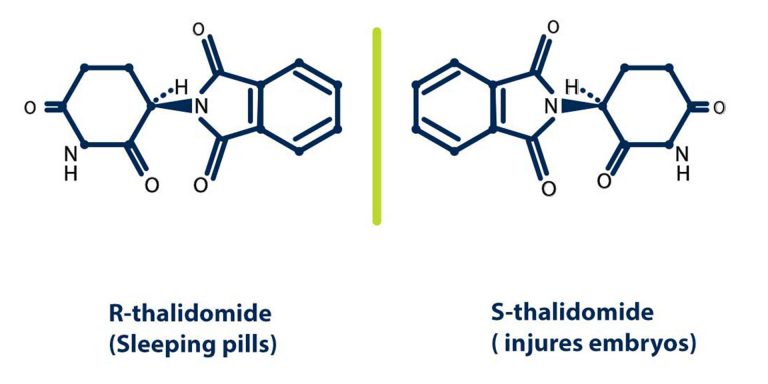
Enantiomers are concrete pairs of mirror-image molecules. They can also be compared well with our hands: Both hands consist of the same "components" - palm and five fingers - but it is not possible to make the two hands congruent by arbitrary rotation. Enantiomers have the same molecular formula and the same bonds, but differ in their spatial arrangement as mirror images. These mirror-image forms can have very different properties - one Enantiomers can taste sweet, the other bitter. Example: Limonene = R-limonene smells like orange, S-limonene smells like lemon. For medicinal products: Example: Ibuprofen = drug with R- and S-enantiomer (only the S-enantiomer is pharmacologically active)
Importance of chirality and Enantiomers

Many pharmacologically active substances are chiral and are therefore present as Enantiomers. Although Enantiomers have the same molecular formula and almost identical physical properties – such as density or refractive index – they are difficult to distinguish or separate using classical methods or procedures such as HPLC (high-performance liquid chromatography). This is precisely why methods such as polarimetry are so important, because they use a property that is different: optical activity.

Modern devices such as a KRÜSS Optronic polarimeter enable high-precision measurements of the angle of rotation and deliver reproducible results even with very low concentrations or sensitive samples. The innovative assistance systems make such instruments particularly suitable for pharmaceutical quality control and research.

Why Enantiomers are studied in the pharmaceutical industry

Despite their structural similarity, Enantiomers can have completely different biological effects. This is because they react differently with enzymes, receptors and other biological target structures, which are themselves chiral. This results in some major differences in:

  • Mechanism of action
  • Pharmacological activity
  • Toxicity
  • Side effects
  • sensory properties (e.g. smell, taste)
Example polarimeter analysis thalidomide-contergan

Example: The substance thalidomide – in the sleeping pill thalidomide it was present as a racemate (enantiomer ratio 1:1). One of the enantiomers had a teratogen effect, i.e. when taken, it caused malformations in pregnancy on the embryo. The tragic incidence surrounding the production of thalidomide prompted the introduction of legal guidelines in many countries. We now have standards, that specify the exact rules to be followed during the development of chiral drugs.

In order to meet the high standards of the pharmaceutical industry and food production, we have developed state-of-the-art assistance systems that guarantee analysis of optically active substances at the highest level.

Polarimeter for highly regulated areas

P9000 series: Safe. Compliant. Fully automatic.

With the new P9000 series, KRÜSS Optronic is setting new standards in polarimetry. The polarimeters measure with innovative assistance systems and intelligent sample monitoring as well as stable temperature control down to ±0.1 °C.

  • The sample can be filled directly in the temperature-controlled measurement devices and checked live via camera. Air bubbles, particles, inhomogeneities and temperature gradients are reliably detected and avoided.
  • A status LED signals that the system is ready to measure, while the system continuously checks the stability of the measured values and only accepts values that meet defined quality criteria.

The P9000 series delivers reliable results, saves time & meets the highest regulatory requirements such as 21 CFR Part 11 and EU Annex 11.

Video assistance systems P9000 series

You are currently viewing a placeholder content from YouTube. To access the actual content, click the button below. Please note that doing so will share data with third-party providers.

More Information

Standards and guidelines

Certified measurement quality according to global standards

You can use a polarimeter to determine characteristic properties of substances without chemically altering or destroying them. These analyzers are used in accordance with normative specifications, especially for sensitive and highly regulated applications. The measurement devices must comply with industry standards (e.g. e.g. GMP, GAMP 5) or provide functions required by standards, e.g. in accordance with 21 CFR Part 11 (e.g. audit trail).

Standards in polarimetry regulate the environmental conditions and sample preparation as well as measurement tolerances, properties and equipment of a device or calibration medium under the aspect of “best practice”. If you use the analyzers in accordance with standard specifications, you can ensure that measurements are carried out correctly and according to reproducible procedures.

Below is an overview of all standards and guidelines known to us in which reference is made to polarimetry. Note:This is a general overview of the standards. We would be happy to discuss which specifications the different polarimeter models from A.KRÜSS meet in a personal consultation. Please feel free to contact us.

Samples and measured values

Angle of rotation of optically active substances for every industry

The angle of rotation of optically active substances in liquids is measured. The values determined are used for quality control in the production of active pharmaceutical ingredients and to check the identity of chiral substances in the incoming and outgoing goods laboratory.

In the food, starch and sugar industries, polarimetric measurements are used to determine concentration and purity. As every industry has its own requirements for this measurement technology, we offer a wide selection of different devices and measurement tubes to meet these needs.

Which substances can be measured?

Below you will find a comprehensive overview of different samples and their specific angles of rotation. Most of the data refer to standard measurement conditions (T = 20 °C and λ = 589 nm). Deviating conditions are noted accordingly.

Note: This overview provides an initial orientation. Which models are best suited to your specific measurement tasks in a personal consultation. Contact us at any time.

Typical areas of application

Wide range of applications. Precise results.

The analysis of optically active substances is one of the most important methods of quality control in the pharmaceutical, chemical, cosmetics, food and beverage industries. This method can be used to determine the identity and quality of substances as well as their concentration in mixtures. The progress of reactions and substance conversions can also be investigated.

The pharmaceutical industry uses the measurement devices to ensure perfect separation of Enantiomers, to determine the concentration of optically active substances or to analyze the relationships between toxic and pharmacological properties.

In food production, analyzers check the purity of raw materials or provide information on product quality. The range of applications for the measurement devices is wide.

For information: Below is an overview of typical areas of application, substances tested, associated standards and the KRÜSS Optronic polarimeters recommended by us.

How to use - Product videos

Depending on the application, we offer various polarimeter solutions, Calibration standards and accessories.

  • In addition to our new P9000 series, there is also the tried and tested P8000 series with water sample temperature control.
  • Mainly used for training purposes, the P1000-LEDIt measures optical rotation according to the half-shade principle.
  • An economical solution is the P3000 modelIt is used when a measurement accuracy of ±0.01° is sufficient.
  • With the PTB-certified quartz control plates (OIML, ICUMSA and Pharmacopoeia compliant), the calibration and adjustment of KRÜSS Optronic measurement devices can be carried out precisely and easily.

How to use - Product videos

3 Videos

Documents

Shopping Cart
Scroll to Top